
This is a period of English theatrical history I adore. When most teenagers
in the ’90s were discovering Dylan, The Stones, Hendrix, etc. I was discovering comedy albums on C.D. and vinyl like Jonathan Winters, Bob Newhart, Steve Martin, and periods in comedy history like Restoration comedy, Commedia dell’arte, or comic playwrights like Aristophanes. Out of the Restoration comedy, Commedia dell’arte, and Aristophanes, I’ve so far performed in three.
The Restoration when it comes to theatre at least, was from 1660 to 1710. 1660 was when King Charles II returned from exile in France and was restored to the throne as King, after 18 years of puritanical rule. And with his return he brought back a lot of French culture with him. He was King until 1685, but plays continued to be written in that style.
A lot of ideas and plots were borrowed from French playwrights like Molière. For example The Country Wife (1675) and The Plain-Dealer (1676) by William Wycherley.
It was the first time women actors were allowed on the English stage. Up until then, female characters were played by young men.
Plots of the plays were often convoluted or complicated, and usually just a vehicle for dialogue. I noticed that sometimes character would be stood in the room mocking each other for a few pages. The playwrights valued wit.
The era also gave rise to the first professional female playwrights as well like Aphra Behn and Mary Pix.
While the language is closer to modern English than Shakespeare is, it was socially very dense. Meaning there was the literal thing being said, a sexual innuendo, testing status, flirting or not, and performing wit. Plus, there would also be reference tro things, people, and places that Restoration audiences would’ve understood that need a lot of heavy translating or editing for today.
The plays relied on used different stock characters so the character were instantly recognisable. They would’ve been parodies of different types of people seen in London at the time. I’m only going to mention three of the them for now:
The Rake – the witty, womanizing Aristocrat who liked to drink. Modern equivalents could be Tony Stark, Don Draper, or Captain Jack Sparrow who exemplify similar bad boy behavior.
The Fop – this character used to think he was a rake, or think he was smarter than what he was. Often very vain, fashionable, and self-conscious. Modern examples might be Derek Zoolander, Prince Humperdinck (Princess Bride), and Jean-Ralphio Saperstein (Parks & Rec). Another good comparison clothing-wise is when we see Garth in Wayne’s World dressed head to toe in sponsored clothing. I thought about adding Ricky Bobby as he has elements of the fop, but he is too arrogant and clueless.
The Coquette – intelligent woman, with a razor sharp wit that matched the rake. She keeps potential livers at arm’s length. Modern equivalents might be Samantha Jones (Sex in the City), Cher Horowitz (Clueless), and Fleabag. Some of this stock character’s traits often appear in the female leads of modern romantic comedies.
The Virtuous Heroine – she has strong moral judgment, remains faithful to her principles, and often serves as a moral counterweight to the rake. Modern equivalents could be Leslie Knope (Parks & Rec), Hermione Granger (Harry Potter), and Pam Beesly (The Office US).
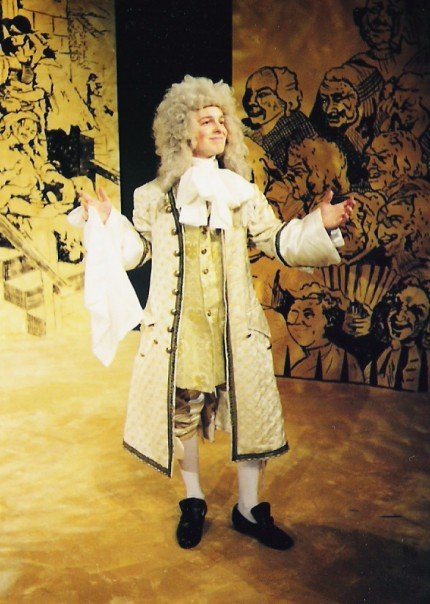
In the picture of me, I’m playing the fop Sir john Roverhead in The Beau Defeated written by Mary Pix. I’m wearing a big wig, heels, and holding a giant handkerchief.
Unlike how some people might view these clothes today, heels were very masculine. They were associated with riding, wealth, and elite status. Wigs on the other hand, represented long flowing hair, and had long been associated with male beauty, aristocratic status, and vitality. It was a fun role to play. But I feel that if you’re staging a Restoration comedy today, it should be done in contemporary dress.
I find it interesting as these comic archetypes have changed and muted over the centuries and they still pop up in various modern films and plays.