
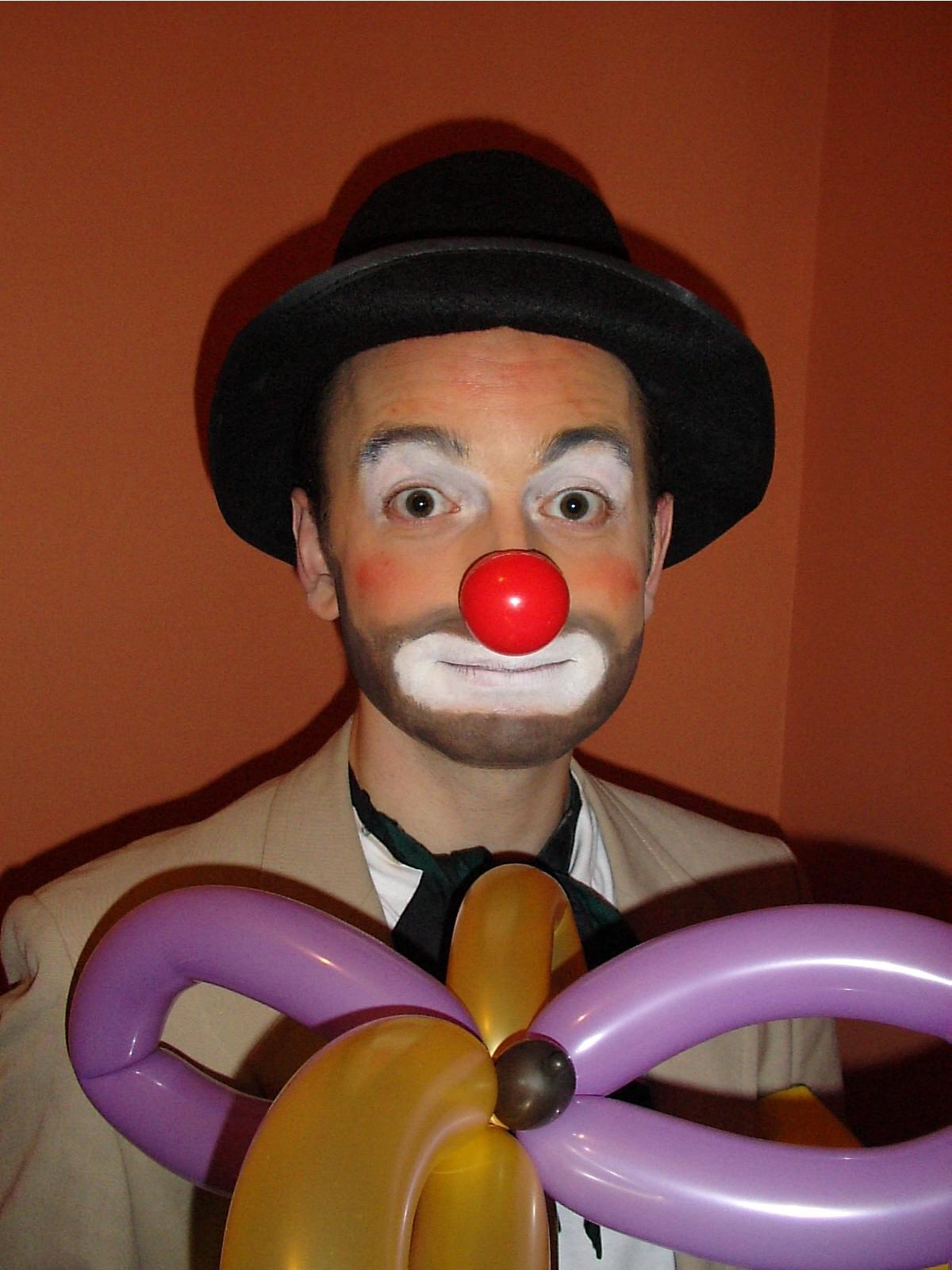
Between 2004 and 2005, I worked as a children’s entertainer.
A friend of a friend was working for a company, mostly performing magic for kids. I got recommended to try out for the company. I auditioned, got in, and was invited to do an all-day training session.
Halfway through, they announced that one of their entertainers couldn’t make it to a party. They normally sent two, and they couldn’t leave one by himself. The owner of the company looked at me and said, “It’s going to be you.”
In case you come to this post fresh and have not read anything else, I got chosen due to my performing experience. I’d done devised theatre, improv, stand-up and sketch comedy, Commedia dell’arte, pantomime, and clowning workshops with people like Marcello Magni, Peta Lily, and Angela de Castro.
“Hmm? What? Come again? Lil’ ol’ me? Why, I do declare…”
But I kept that all inside and just said, “K.”? They gave me the address, ordered me a cab, and that’s how I began my career as a children’s party performer.
That first party went well. I stuck with it and eventually ended up doing a few corporate gigs too. I taught myself balloon animal modeling from a book and learned a few magic tricks as well.
There were a lot of themed parties: pirates, wizards, that sort of thing.
During the week, I had a day job, But on the weekends, I did parties. I was minted.
Once, I had to dress up as an elf and entertain kids as they waited to meet Santa Claus. Very David Sedaris. Although, I’ve never read The Santaland Diaries, never really felt the need. I lived it.
At no point did a child ever ask about the second cave entrance, the elf over there, or who might be down there.
Spoiler alert: another Santa Claus.
My Santa seemed nice. He looked the part, at least, close enough to the image of Santa that lives in my head. My neighboring elf wasn’t so lucky. Her Santa smelled of Scotch and had a beard that looked… a little ropey, even though it was real.
A lot of kids at the time wanted Beyblades for Christmas. I had to pretend I knew what those were. Smartphones weren’t really a thing yet.
Eventually, when “hey man” moved in with me, I found out he was a children’s party clown too. He mostly did freelance gigs through word of mouth, probably with a different company.
He suggested I create my own clown costume. Until then, I’d just worn whatever the party company supplied. He was right. I was interested in Chaplin and Keaton, and clowning, sort of adjacent to all that.
There are three types of clown: Whiteface, Auguste, and Character, sometimes called Tramp or Hobo. Chaplin’s Tramp came from the Character clown. There have been clown figures going all the way back to Ancient Egypt. Modern clown evolved from Commedia dell’arte, an Italian form of professional theatre dating back to the 15th century.
I figured the best way to minimize the risk of kids being scared was to go the Character route. No bright colors, no clown shoes, no outrageous makeup. Just white around the eyes, blacked-out eyebrows, pink cheeks, and a red plastic clown nose.
At some point, my friend whom I shall call “hey man” who also performed as a clown started dating a woman who had coulrophobia – a fear of clowns. Which didn’t make sense to me.?His dating her, I mean. Not the fear part. The fear I understood. I could even see why he was attracted to her. But she couldn’t be around him when he was in costume.
And the thing is, he was in costume a lot.
When I did parties, I’d arrive early, meet the hosts, find a bathroom I could change in, and get ready for the show.
“Hey, man” preferred to arrive on time. Which meant getting into costume at home and using public transport, already fully dressed as a clown. And if his girlfriend was over, they’d say goodbye, she’d go into a different room, and he’d get ready and leave.
I tried to talk to her about it once. I asked her to imagine me putting on clown makeup? She said, “See, you’re becoming a clown now, and I don’t want that.”